Showing posts with label Don't Judge a Book by Its Cover. Show all posts

Sunday, December 12, 2021

7 Books I Bought Despite the Cover

Last month I wrote about books I bought because their cover caught my eye. This month, it’s time for the opposite. Brace yourself! Here are 7 books I gave a chance despite the injustice done to their covers.


1)   Flatland: A Romance of Many Dimensions by Edwin A. Abbot

Can this poor book not get a decent cover design? The library copy I read was so colorful, and I bought this particular copy online. What’s with the format of this particular copy being so flat? Wait… hold on. I get it. Ha!

A fascinating story based in mathematics and religion. Though it’s not exactly a compelling story, it’s a fascinating discussion on multiple dimensions and the doubt often accompanied by new discoveries because they don’t follow the way things have always been done. Now that I teach math, I have an even greater appreciation for this book.
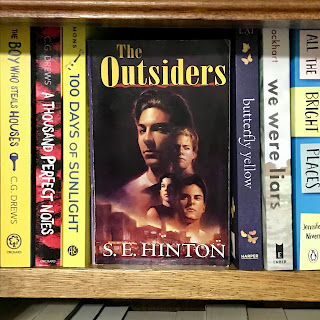


2)   The Outsiders by S. E. Hinton

Another book that can’t get a decent cover. I mean, the 50th anniversary edition is decent but nothing to write home about. The copy I borrowed in college had me cringing, and my current edition is just… why? Who thought this was a good idea?

If the book hadn’t been assigned reading in one of my classes, I definitely wouldn’t have picked it up. Now I recommend it all the time. Maybe this book can get a break because it’s so popular?
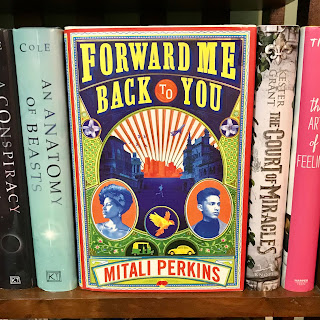


3)   Forward Me Back to You by Mitali Perkins

This one was actually a gift from a friend, and if it wasn’t, I probably never would have picked it up. But I’m so glad I did! I love this story. It’s a powerful one about empowerment, found families, and the fight against human trafficking.

But the cover hurts my eyes. I also remember when I was reading it, my dad got a glimpse of the book and asked if it was about communism. Which it’s not, but I can see where he got that idea from. Maybe I’m missing some cultural significance in the cover design and its color scheme?



4)   Elantris by Brandon Sanderson

This cover never intrigued me, but I ended up buying it without reading it first because it’s by Brandon Sanderson! There are very few authors I’ll do that with.

When I was reading the book, I would glance back at the cover to get a better feel for the setting. But for whatever reason, this cover isn’t very memorable to me. The characters are though. I wish I could meet Raoden and Sarene!
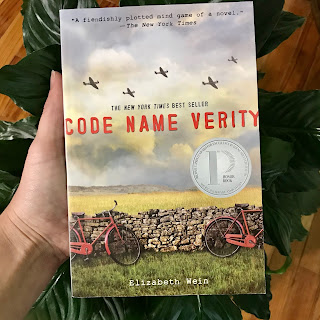


5)   Code Name Verity by Elizabeth Wein

This book actually has some pretty covers. Do you think the bookstore would have one? Haha! Nope. You get a bicycle. Anybody who hasn’t read this book want to tell me it’s about? I’ve read it, so I’ll go first. Spies. Intrigue. Female pilots who make me want to get my pilot’s license because the book was written by a female pilot! And we get a bicycle. *sigh* Forget the cover. Check out the first lines.

“I AM A COWARD.

“I wanted to be heroic and I pretended I was. I have always been good at pretending.”
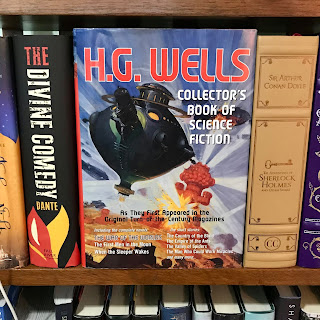


6)   H. G. Wells: Collector’s Book of Science Fiction

Yeah, this cover is just awful. But the book was cheap, and it has a lot of classic science fiction stories, so I couldn’t pass it up.

I used to love looking at the pictures for War of the Worlds when I was a kid. I didn’t bother reading the story back then, but the idea fascinated me. Now, I’ve read the book a couple times, and it’s still the only one in the collection I’ve read, but I’ll get around to the others… someday…
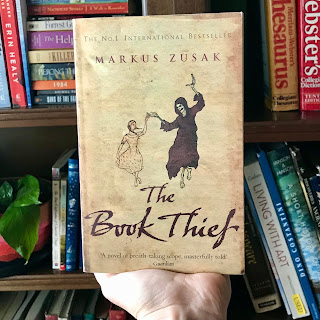


7)   The Book Thief by Markus Zusak

This one is another book that actually has a decent cover, but I didn’t get one of those copies because I wanted to support an indie bookstore. #shoplocal Unfortunately, my current city of residence doesn’t have many indie bookstores, so I tend to buy from Barnes & Noble. It’s not ideal, but at least it beats buying from Amazon.


There you have it! Seven good reminders not to always judge a book by its cover.


Let’s chat! Have you read any of these? What are some books you own that aren’t the prettiest but you enjoy anyway?


***


Similar posts: 8 Books I Bought Because of the Cover; Don’t Judge a Book By Its Author, Or Should You?; and Don’t Judge a Book by Its Cover

Sunday, June 12, 2016

Don't Judge a Book By Its Cover

You know that one thing readers say you should never do? Never judge a book by it’s cover, right? Well, I’m guilty as charged. I do this all the time. Even though I’ve grown up hearing this phrase, and yes, I believe it’s important, I still do it. Why is that?

Several reasons actually. It’s there something just marvelous about art? When visual art is combined with the power of words, a magical thing is created. How can we not judge a book by its cover if we are predetermined to judge art? If you don’t believe me, take a look at two of my collections:


Don’t tell me they’re not pretty. Look at the details on those covers! On the left, you can see so many layers in the night sky, and if you look closely at Sherlock’s silhouette on the right you can see it’s made up of smaller images. (Yes, I did keep the price tag on Arabian Nights. No, you can’t buy it from me. I like the peel the stickers off gradually as I read because I’m a fiddler, [not the musical type].)

But there come times when art can be misleading, discouraging readers from picking up particular books. Take this one for example:


I hate this cover. This is actually a library copy. When I was reading it for my class Speculative Fictions, I was super self-conscious, kept the cover facing down whenever I was in public. In fact, from the very cover, I thought I’d hate the book itself. Instead, I ended up liking it and giving it 4/5 stars. Yes, the cover is crude, and there are some parts of the book that were disturbing, but I appreciated how Fevvers is a woman who ultimately doesn’t rely on other people for her identity, and throughout the book gender norms are often reversed. And the writing style is poetical.

On the other hand, pretty covers can be misleading.


I’d say this one is intriguing to say the least. It can lead readers to ask questions and crack open the book? Why is the sun so big? What’s the ruined structure? Who are the characters? And to be honest, even though I’ve read the book, I still don’t know. Last and First Men only has a couple selected characters. Humankind is the main character of this book. Overall, while I found everything rather interesting, I didn’t care for the book and gave it 2/5 stars.

Then there’s my Tolkien collection.


Not bad, right? Sure, some people don’t care for movie adaptations as covers, and sure this scene is from THE TWO TOWERS, but the book itself is good. And besides, it matches The Silmarillion in size and looks nice next to it on my shelf. Then I went out and bought these beauties:


Brilliant right? The shading, the angles, oh, I just love it. Except they don’t match. But in a way, this mishmash of editions is like my life as an army brat. I’ve moved around so much that I’ve picked up various cultures along the way. They may be different, and I’ve lived in different states and countries for different lengths of time. But despite my experiences, I’m still me on the inside.

Covers are unreliable. Yes, they can be pretty (or maybe not), but they are not the end-all-be-all of books. The words are. That’s why we read books, isn’t it? For the words? Yet it’s still difficult to separate an idea of a book (the cover) from the book itself (the individual words) until you’ve actually read it.

So, how do we go about not judging a book by its cover? Here are just a few tips that I use:


1)     Read the back blurb first.


If you can, don’t even look at the cover. Just read the description on the back or online. This will help give you a sense of the story more so than the cover. I did this with We Were Liars (4/5 stars; definitely recommend. Book review coming soon!).

Pros: Getting actual words!
Cons: Sometimes the back blurb gives away important parts of the book. If this book came with a recommendation, just skip the cover entirely and read the book!

2)     Ask for recommendations.


Word of mouth is a great way to find good books because they’ve already passed the test of at least one person.

Pros: If you enjoy the book, you already have somebody to discuss it with and you might find even more good books to read in the future.
Cons: Different people have different tastes. Until you find somebody who has similar tastes as you, you might end up with recommendations you hate.  

3)     Read reviews.


This is one of my favorite things to do. Not only do you get to read the blurb, which tells me what it’s about, but you can actually read what other people thought about it and why they did or didn’t like it. I even like to read the bad reviews because if all of the negative reviews center around the book being too long or simply too poetical, I’ll probably pick it up.

Pros: You’re more likely to know what you’re getting into, and it can lead you to think about things you wouldn’t have considered before.
Cons: Other people’s opinions can taint yours and potentially ruin your chances of picking up or enjoying a book.


4)     Take a chance.


Whether it’s grabbing a book merely based off the title, reading a book because of an ugly cover, or buying one of those books wrapped in paper so you can’t see the cover or the blurb (a.k.a. a blind date with a book), go for it. No matter how much pre-reading prep you do, reading a book is always taking a chance. So what are you waiting for?

Pros: You get to read a book! Who knows what you’ll discover.
Cons: You might choose the wrong book and end up spending money on something you don’t enjoy. But then, you’ll just have to get another one. 

I hope this helps. And remember, despite all the temptation, don’t judge a book by its cover. You never know which favorites you might discover if you take a chance! 

***

Be honest, how often—if ever—do you judge a book by its cover? What’s your favorite book cover? What are some of the ways you pick which books to read? 

Literary references: Tales from the Arabian Nights, translated by Sir Richard Francis Burton, Sir Arthur Conan Doyle’s The Adventures of Sherlock Holmes and Other Stories, Angela Carter’s Nights at the Circus, Olaf Stapledon’s Last and First Men, J.R.R. Tolkien’s The Lord of the Rings and The Silmarillion, and E. Lockhart’s We Were Liars.