Showing posts with label History. Show all posts

Sunday, February 13, 2022

Subgenres: Historical Fantasy

My brother is an avid history buff. While I may not share his enthusiasm for all things history, especially when it delves into the politics of the past, *gags* I do enjoy historical fiction. I’ve already written a post about this genre, and my opinions have only slightly changed, so I’d like to jump into a blend of genres—historical fantasy.

Historical fiction can be a fun genre. Fantasy can also be great. But what about when you have historical fantasy! Prepare for historically inaccurate magic, everybody. Or maybe it’s real…


Historical fantasy: a subgenre of fantasy that takes place in the real world in the past. The character(s) may be involved in historical events, meet historical figures, or experience historical settings. Magic is an element that puts a twist on events that we may be familiar with.


Suspension of Disbelief

In historical fiction, writers might get flack if they didn’t get that one date right. Or maybe that character was supposed to be blonde. Hold up. What is this, a movie adaptation? *checks notes* Nope. It’s about books. Okay, moving on.

Historical fantasy is designed to be inaccurate. Or maybe a more appropriate word would be unexpected.

One thing I enjoy about fantasy is the suspension of disbelief. Historical fantasy is one of those fantasy sub-genres that pushes that boundary of disbelief. It puts characters real or made up and puts them in situations that actually happened, then asks the readers to bear with them while it throws in a touch of magic, in a similar manner to magical realism, where it’s hard to tell what’s real and what’s not.

A great example of book that suspends disbelief is Megan Banne’s The Bird and the Blade. Though it leans more toward the historical than the fantastical, there are fantastical elements that may leave the audience wondering, “Hey, wait a second… Did I read that right?”


Historical Events

Many of us have heard about the Battle of Waterloo, and if you’ve happened to read Les Miserables (not fantasy), you’ve probably read more than you wanted to know about it. But, have you heard about time during the Battle of Waterloo where the magician broke his moral code to create zombie soldiers? Okay, when I put it that way, it sounds weird, but I suppose weird applies to the entirety of Jonathan Strange & Mr Norrell (Susanna Clarke).


Historical Figures

What’s historical fiction without historical figures? Okay, so they don’t show up in every book. But historical fantasy sometimes includes historical figures too. Just because it’s fantasy doesn’t mean it doesn’t try to be true to the character(s), though. Nadine Brandes does a great job with historical fantasy characters in Romanov (Anastasia Romanov) and Fawkes (Guy Fawkes). Though I prefer the plot of Fawkes, both stories serve as a great introduction to real figures and their tales.

Another example that includes historical figures is Dante’s Inferno. In the epic, Dante goes on to meet long-dead poets like Virgil, Homer, and Ovid. It’s a common characteristic in classical fantasy where the main character meets with a historical figure or somebody of prominence, who would now be considered historical. Though those don’t quite qualify as historical fantasy.


Historical Settings

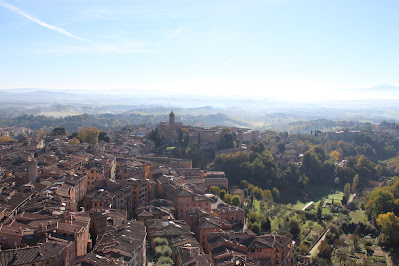
Not going to lie, this is one of my favorites because a lot of these places, you can actually visit!

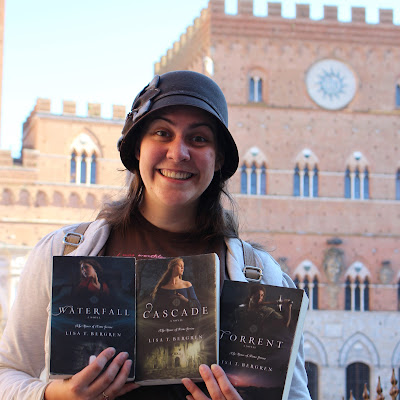
One of my favorite examples is The River of Time series by Lisa Tawn Bergren. Why stop at a fictional visit to Italy when you can time travel to medieval Italy and fight with a broadsword or a bow. I really want to take up broadsword fighting now. Thanks a lot. After reading these books, my sister and I visited Siena, one of the cities where the story takes place, and Firenze (Florence).

It’s been a while since I’ve read the stories, though. Perhaps it’s time for a reread…


There you have it! Just a few characteristics of historical fantasy and some recommendations.


Let’s chat! Do you enjoy historical fantasy? Have you read any of the books listed? Any that I missed?


***


Similar posts: Subgenres: Portal Fantasy, 7 of my Go-To Authors, and 7 Reasons I Enjoy Historical Fiction

Sunday, August 27, 2017

7 Reasons I Enjoy Historical Fiction

This post was inspired by a friend who gave me a completely different blogging prompt. But hey, that’s what happens with writing! Not only do you get a million plot bunnies, but when you finally pick one, they also tend to run off on a rabbit trail. So long as you don’t end up down the rabbit hole… 

Enough with Alice in Wonderland, though. This post is all about historical fiction! I’m here to talk about another one of my favorite genres, where fact meets fiction. 


I’ve been on a historical fiction reading spree lately, particularly when it comes to WWII fiction. I read other historical novels as well, but this has been my latest preference, especially considering my recent travels in Europe. Here are just a couple of reasons I enjoy historical fiction: 


1. It’s informative. 

I get a better sense of place from historical fiction than from history books. While history books will tell you about dates, historical fiction will tell you what a city might have looked or smelled like and how people may have lived their day-to-day lives. 

And let’s face it, reading or watching historical fiction makes us feel smarter. I know it does for me. Don’t deny it. 


2. It’s easier to remember a story if I can empathize with the characters/people. 

Need I say more? Fact: I can breeze through 300 pages of historical fiction, but it takes longer to get through 50 pages in a history book. 


3. Culture! 

I’ve touched on this topic before when it comes to 7 Reasons I Enjoy Sci-Fi, but I’m here to tell you about it again. I like culture. Once you take the time to truly understand somebody and where they’re coming from, they’ll be more open to interaction. And there’s nothing like understanding that not everybody lives their lives the way you do. If you can’t travel to a place to understand a certain culture, you can at least read about it. That way, you might even spare yourself the culture shock. 


4. Time travel. 

Time machines don’t exist… yet. And let’s face it, time travel would be a bit freaky. There are so many different theories about what could possibly go wrong and how such travel would work at all, but of course, that’s for a post on science-fiction not historical fiction. (Problems with time travel: germs vs. antibodies; language differences; spatial differences; the space time continuum; etc.) 

But when it comes to books, you can “safely” travel back in time and the most likely dangers you’ll encounter include papercuts, depleted bank accounts, and broken hearts. Okay, I never said you’d make it off easy. Reading is a dangerous game, my friend. 


5. Actual travel.*

It’s fascinating to read about a place and then travel there. That’s the problem with fantasy. The closest I’ll ever come to Narnia is the wardrobe in my house or visiting Oxford, which, let’s face it, looks nothing like I imagine Narnia to be. And sure, you can “visit” Middle Earth, but do you get to see Minas Tirith or Lothlorien? Unfortunately, not. (But I still want to go!) 

With historical fiction, you can visit actual sights. And while I’ve been to many, many places in my wanderings, I enjoy and understand a place even more if I’ve read a story about it before. I may even fangirl over a historical sight. I’ve visited Siena, the town where the Betarrini have been. (Okay, so the River of Time books are part fantasy, but they’re historical fiction too!) I’ve been to London, where many famous authors lived and kings and queens ruled. 

If you’re into actual travel and fiction, be sure to check out my latest newsletter, River of Books, and subscribe for more below!


Subscribe to the Word Storm Newsletter

* indicates required


*I can tell when an author hasn’t visited the actual historical location or done their research. The setting tends to lack the personal touch that you can only get from visiting a place or talking to somebody who has. 


6. Author’s notes. 

Once I’ve engaged with a story, I thoroughly enjoy getting a bit more context. Maybe it’s the intellectual in me, but I like to learn the facts about something that’s already fascinating. Elizabeth Wein does a great job of this when it comes to her historical fiction novels. I would seriously like to see where more authors get their historical research from. 

And not just historical novels either. I want to know more about the facts and fiction when it comes to stories about people with disabilities or mental illness. A lot of stories just end, and I’m left asking what was real and what was made up. Sometimes, it’s hard to tell. Petition for YA authors to write more author’s notes. Seriously, people. I want to know more!


7. It’s sobering. 

Historical fiction reminds us that the world does not revolve around us. There were hundreds of thousands, millions of people who lived before us. Reading historical fiction can help us come in contact with just a few of those lives through stories of actual people or places. It also points out many of the tragedies that have occurred throughout the years and helps teach us what it truly means to be human. 


8. Bonus! (And because I can’t count): It helps me connect with my brother. 

My older brother is obsessed with history. I often refer to him as a walking encyclopedia. And even though we were pretty close growing up, so much so that we were often mistaken for twins, college has seen us develop different opinions and interests. So I may not have as much in common with my brother as I like, but at least there’s still history. 

Having watched BBC’s latest adaptation of Shakespeare’s history plays, The Hollow Crown, has enabled me to talk with my brother about the War of the Roses. Reading novels that include battle strategy is another favorite of mine because my brother could go on and on about the pincer movement or guerilla warfare. 

Enjoy historical fiction? If you related to this post, you might enjoy reading the following books: The Boston Girl by Anita Diamant (early 1900s, immigration, USA) All the Light We Cannot See by Anthony Doerr (WWII, France and Germany), Inside Out and Back Again by Thanhha Lai (1975, immigration, Vietnam and USA), and Code Name Verity by Elizabeth Wein (WWII, pilots, France and England).

***


Let’s chat! Did I miss any great points about historical fiction? What are some of your favorite genres? How often do you read historical fiction? What is your favorite era to read about?

Sunday, March 12, 2017

7 Reasons I Enjoy Medieval Novels

Last year I wrote a couple posts on genres I liked and didn’t like. Today I’m here to continue and write about the Middle Ages and the qualities I like that tend to pop up in fiction.


1) The Middle Ages was the time of castles.


One of my favorite parts about living in Europe is visiting all the castles. They’re amazing. The ruined castles are especially amazing because they leave many facts up to the imagination. I like exploring the old towers and along the walls, wondering what they may have been like in their prime. From the River of Time series and The Alliance series to The Lord of the Rings, medieval stories offer just a glimpse of such a time.

2) Old-fashioned methods of transportation were prevalent.


I could do without riding in the seat/back of a wagon. But I completely enjoy horseback riding, which was just about as common in the Middle Ages as walking, if one could afford a horse. It’s not as though I like to show off my equestrian knowledge while writing medieval stories. I just like to able to read a story and get it. And horses are awesome.

Other fascinating modes of transportation include sailing and dragon riding (though the latter is more fantasy-related). Although books with sailing are not limited to the medieval stories, they are certainly interesting.

3) Travel!


Let’s face it, folks in medieval stories tend to travel a lot. While they may not experience jet lag like we do, they know the pains of walking all day and the confusion that comes with meeting people of other cultures. Because I’ve traveled so much in my own life, I can relate a lot with characters who travel. I know what it’s like to experience culture shock and feet so tired I just want to lay down on that uncomfortable hotel mattress and fall asleep. I’ve also gone camping a couple of times, so I know what it’s like to sleep on the ground, much like many characters, especially Frodo and Sam.

Sam: “Everywhere I lie there’s a dirty great root sticking into my back.”
Frodo: “Just shut your eyes, and imagine you’re back in your own bed, with a soft mattress and a lovely feather pillow.”
Sam: “It’s not working, Mister Frodo. I’m never going to be able to sleep out here.”
Frodo: “Me neither, Sam.”


4) Carrying around weapons is (generally) socially acceptable.


Oh, you just got a new crossbow or ancient sword from your ancestors, feel free to carry it around. After all, who doesn’t want to sport a battle ax or a couple throwing daggers? You never know when you might need it.

Today, on the other hand, you can have concealed and carry weapons in some countries while only the military or the police carry weapons most of the time. Sure, it’s good that we live in times of relative peace (depending on where you live), but swords are awesome. One of my favorite things about the Ritterspiele in Germany is that not only do people dress up in medieval garb, but they also sport their weapons.

5) Books from the Middle Ages are AMAZING!


I’m not just talking about books about the Middle Ages but books that were written in the Middle Ages. The first and second editions of Le Morte Darthur, Sir Gawain and the Green Knight, the old Bibles. You name it. And they’re so stinking pretty. Scribes had to study handwriting and use their best when writing on parchment. Some books were even gilded, covered in gold for decorative purposes.

While books today are printed to be distributed to a wide audience, books in the Middle Ages were hand-written for a select few. And they were made to last. Paper may be more convenient (and humane) than animal skins, but they don’t last as long.

One of my favorite days from my postgraduate studies when I got to visit the University of Birmingham and view their special collections. We got to transcribe scripts (handwriting) and see illuminated manuscripts. At one point, I even got to touch the pages of a book from the 18th century, “adding my fingerprints” to its long history. Parchment doesn’t feel much different from paper. It’s stiff, but it’s also quite leathery. It’s hard to describe unless you get the chance to feel it for yourself.

Generally, though, you would never ever, ever touch a manuscript except with gloves and special training. We received special permission for a select few books.

6) Medieval stories are packed full of information.


Not only do you learn how people dyed their clothes or how markets were run (because that’s so helpful today), but you can also learn about history.

But I’m more interested in the random bits of information. Like…

Did you know that in the Middle Ages, spiral staircases tended to circle up to the left for defensive purposes? Most swordsmen were right-handed, so the defenders would have more room to wield their swords while the attackers struggled to maneuver around the center of the staircase.

7) Medieval stories make me appreciate the present even more.


To be fair, I still enjoy living in the present day. As much fun as it would be to send a message via hawk or pigeon, it could take forever. Not to mention, it could get lost. Then there’s hygiene. I would probably die in the Middle Ages. After all, it was also the time of the black plague, and that’s not even mentioning what they did with chamber pots. And I thought horse droppings were bad. But I still like reading about how men and women survived and made lives for themselves.

It’s fascinating!

***


Literary references: Lisa T. Bergren’s River of Time series, L. Nicodemus Lyons’ The Alliance series, J. R. R. Tolkien’s The Lord of the Rings and The Fellowship of the Ring (film adaptation), Sir Thomas Malory’s Le Morte Darthur, and Sir Gawain and the Green Knight.

Let’s chat! What are some of your favorite qualities of the Middle Ages? What’s your favorite era to read about?