Showing posts with label Historical Fiction. Show all posts

Sunday, October 12, 2025

45+ Novels in Verse for Reluctant Readers and Poets

Hi, guys! Teacher here. For those who know me, you’re probably already aware that I like to seek out lesser-known stories. But as a teacher, I also like to find books that students can easily access. It’s a delicate balance. I like to find stories that are relevant to American and world history. Stories that help readers connect to the written word even for the reluctant reader.

Poetry is great, especially novels in verse, because of all the blank space. But it’s also challenging because most people take one look at poetry and want to run away screaming. But we’re surrounded by poetry all the time. It’s in our music. In old tales of fan-fiction. Yes, I’m looking at you Paradise Lost. But poetry doesn’t have to be hard. It’s meant to be felt and enjoyed, read aloud, shared and shared again.

I’ve gotten to that point in reading where I’ll walk into a library and ask for a recommendation for a novel in verse and get the same five books over and over again. Which is great. Those books are good, but I’m looking for a bit more. I was talking with one of my librarian friends, and after I asked her for a recommendation, she laughed and said, “I usually ask you for recommendations!”

So here, you go, everyone. I made a list for you. I’ve sorted through books I’ve read and yet to read.* Here are 45+ novel in verse for those who enjoy poetry and those who may want a light, easy-to-read novel.


*Some novels in verse that I’ve read did not make the recommendation list. See my Goodreads for more.


Top-Recommended Novels in Verse (Easy to Access)

The Crossover by Kwame Alexander

Heartbeat by Sharon Creech

Alone by Megan E. Freeman

Full Cicada Moon by Marilyn Hilton

House Arrest by K.A. Holt

Inside Out & Back Again by Lai Thanhhá

Red, White, and Whole by Rajani LaRocca

Me: Moth by Amber McBride

Blood Water Paint by Joy McCullough (trigger warning: rape)

Long Way Down by Jason Reynolds (trigger warning: gun violence)

Other Words for Home by Jasmine Warga

Brown Girl Dreaming by Jacqueline Woodson


More Obscure Novels in Verse

Contemporary Gems

Ode to a Nobody by Caroline Brooks DuBois

Planet Middle School by Nikki Grimes

Closer to Nowhere by Ellen Hopkins

Good Different by Meg Eden Kuyatt

Saving Red by Sonya Sones


Historical Fiction

Unbound: A Novel in Verse by Ann E. Burg

Audacity by Melanie Crowder

Somewhere Among by Annie Donwerth-Chikamatsu

Enchanted Air: Two Cultures, Two Wings by Margarita Engle

Looking for Me by Betsy Rosenthal

Like Water on Stone by Dana Walrath


Poetry from my TBR (To-Be-Read Pile)

Solo by Kwame Alexander

Poetry and music! Yes! I like to tell reluctant readers that even if they don’t understand poetry, it’s in our music too. What better place to start?


Chlorine Sky by Mahogany L. Brown

A contemporary novel and a Goodreads choice award nominee.


Love, Love by Victoria Chang

What initially sounds like a romance is described as a tale of friendship.


The Boy Lost in the Maze by Joseph Coelho

A retelling of Theseus in the Minotaur but contemporary and poetry! Sign me up please. I once wrote a novel about a contemporary labyrinth, so I’m extra curious about this one.


Toffee by Sarah Crossan

Need I say more? It has toffee in the title!


Bull by David Elliott

Another retelling of Theseus and the Minotaur in verse! Wait a minute… I’m sensing a pattern…


The Lightning Dreamer by Maragrita Engle

Historical fiction can be tough enough as it is, but I like it when poetry takes a turn, often breaking down difficult topics into smaller chunks.


The Firefly Letters by Maragrita Engle

Some authors writer a lot of novels in verse.


Wave by Diana Farid

There’s a surfer on the cover! Let’s go!


Apple by Eric Gansworth

Indigenous fiction. I’ve enjoyed reading indigenous fiction lately, and I think I’ll have to share some of my favorites in its own post.


Root Beer Candy and Other Miracles by Shari Green

I’m totally judging this book by its title. I like root beer candy, okay?


Don’t Call Me a Hurricane by Ellen Hagan

What is it with novels in verse and the ocean and gorgeous covers? I’m here for it.


Knockout by K.A. Holt

The same author who wrote House Arrest, a popular novel in verse recommendation.


If I Tell You the Truth by Jasmin Kaur

This particular book looks tough, but it’s one I want to read.


In the Beautiful Country by Jane Kuo

This book sounds similar to Inside Out & Back Again in that it also features an immigrant family moving to America, except this story features characters from Taiwan.


When the Clouds Touch Us by Lai Thanhhá

The sequel to Inside Out & Back Again, which I have read and taught multiple times. Yes, please!


Up From the Sea by Leza Lowitz

Did somebody mentioned the sea?


We Are All So Good at Smiling by Amber McBride

She wrecked my heart with Me: Moth. Sure, I want to read another one of her books.


Onyx & Beyond by Amber McBride

Guess she has a thing for novels in verse, and I like to suffer.


Under the Broken Sky by Mariko Nagai

Have you seen the cover!? Go look at it!


A Time to Dance by Padma Venkatraman

Did somebody say dance? It’s been a while since I’ve done any dancing, but I enjoyed it for a time. Let’s go.


Paper Hearts by Meg Wiviott

A novel in verse about the holocaust.


The Snow Fell Three Graves Deep by Allan Wolf

I don’t know why, but this book sounds really intriguing. But I can’t find it in any library, so I’m seriously tempted to order a copy and hope for the best.


So there you have it. 45+ novels in verse for the reluctant readers and the avid poetry reader. If you’ve read any of these, what did you think of them? Are there are any more I should add to my list? Let me know what you think!

Until next time. Happy reading!

Sunday, February 13, 2022

Subgenres: Historical Fantasy

My brother is an avid history buff. While I may not share his enthusiasm for all things history, especially when it delves into the politics of the past, *gags* I do enjoy historical fiction. I’ve already written a post about this genre, and my opinions have only slightly changed, so I’d like to jump into a blend of genres—historical fantasy.

Historical fiction can be a fun genre. Fantasy can also be great. But what about when you have historical fantasy! Prepare for historically inaccurate magic, everybody. Or maybe it’s real…


Historical fantasy: a subgenre of fantasy that takes place in the real world in the past. The character(s) may be involved in historical events, meet historical figures, or experience historical settings. Magic is an element that puts a twist on events that we may be familiar with.


Suspension of Disbelief

In historical fiction, writers might get flack if they didn’t get that one date right. Or maybe that character was supposed to be blonde. Hold up. What is this, a movie adaptation? *checks notes* Nope. It’s about books. Okay, moving on.

Historical fantasy is designed to be inaccurate. Or maybe a more appropriate word would be unexpected.

One thing I enjoy about fantasy is the suspension of disbelief. Historical fantasy is one of those fantasy sub-genres that pushes that boundary of disbelief. It puts characters real or made up and puts them in situations that actually happened, then asks the readers to bear with them while it throws in a touch of magic, in a similar manner to magical realism, where it’s hard to tell what’s real and what’s not.

A great example of book that suspends disbelief is Megan Banne’s The Bird and the Blade. Though it leans more toward the historical than the fantastical, there are fantastical elements that may leave the audience wondering, “Hey, wait a second… Did I read that right?”


Historical Events

Many of us have heard about the Battle of Waterloo, and if you’ve happened to read Les Miserables (not fantasy), you’ve probably read more than you wanted to know about it. But, have you heard about time during the Battle of Waterloo where the magician broke his moral code to create zombie soldiers? Okay, when I put it that way, it sounds weird, but I suppose weird applies to the entirety of Jonathan Strange & Mr Norrell (Susanna Clarke).


Historical Figures

What’s historical fiction without historical figures? Okay, so they don’t show up in every book. But historical fantasy sometimes includes historical figures too. Just because it’s fantasy doesn’t mean it doesn’t try to be true to the character(s), though. Nadine Brandes does a great job with historical fantasy characters in Romanov (Anastasia Romanov) and Fawkes (Guy Fawkes). Though I prefer the plot of Fawkes, both stories serve as a great introduction to real figures and their tales.

Another example that includes historical figures is Dante’s Inferno. In the epic, Dante goes on to meet long-dead poets like Virgil, Homer, and Ovid. It’s a common characteristic in classical fantasy where the main character meets with a historical figure or somebody of prominence, who would now be considered historical. Though those don’t quite qualify as historical fantasy.


Historical Settings

Not going to lie, this is one of my favorites because a lot of these places, you can actually visit!

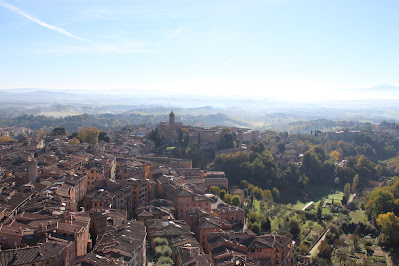
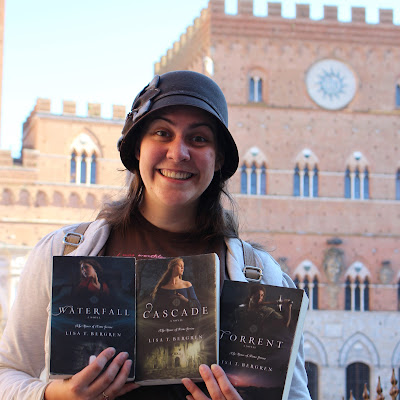
One of my favorite examples is The River of Time series by Lisa Tawn Bergren. Why stop at a fictional visit to Italy when you can time travel to medieval Italy and fight with a broadsword or a bow. I really want to take up broadsword fighting now. Thanks a lot. After reading these books, my sister and I visited Siena, one of the cities where the story takes place, and Firenze (Florence).

It’s been a while since I’ve read the stories, though. Perhaps it’s time for a reread…


There you have it! Just a few characteristics of historical fantasy and some recommendations.


Let’s chat! Do you enjoy historical fantasy? Have you read any of the books listed? Any that I missed?


***


Similar posts: Subgenres: Portal Fantasy, 7 of my Go-To Authors, and 7 Reasons I Enjoy Historical Fiction

Sunday, November 22, 2020

Book Review: The Magnolia Sword

“Brotherhood might be unique to men, but loyalty, devotion to friends, and a sense of fairness are not. They are the precise reasons I became a conscript in Dabao’s place. I could never have been at peace with myself knowing that it was within my power to do something for Auntie Xia and Dabao and not have done it.”

I’ve said it before, and I’ll say it again—I don’t usually go for retellings. But I thought I’d give this one a chance. After all, it’s a Mulan retelling that’s strictly historical fiction written by an American author who immigrated from China as a teenager. So yeah, I was definitely interested.

I know a lot of reviewers may be familiar with Sherry Thomas already, but this is the first I’ve read by her, and I must say I am pleased. I really enjoyed her writing style, with a smattering of historical details, a pinch of setting that isn’t too overwhelming, and the subtle bits of humor.


Book: The Magnolia Sword: A Ballad of Mulan by Sherry Thomas
Genre: Young Adult, Historical Fiction
My rating: 5/5 stars
Mini description: I could do this blindfolded

The story itself starts off at a slow burn pace. For a while, I found myself wondering, “Okay, where is this really heading?” But I enjoyed it all the same, and I wanted to make the book last, so I tried to spread it over a couple weeks. Until I accidentally devoured two hundred pages in one night.

The part I particularly liked about the pacing was the travel elements. I love a good travel story where the main characters are just sick of traveling by day two because they’re so stinking saddle sore (or sore from walking, but that was not the case here). I love traveling, so I feel that in my soul.

Another element I enjoyed was the culture. I did not know that China was such a melting pot back in the 5th century, and the book helped add more to my mental historical timeline. Throughout the book, Mulan references authors like Sun Tzu and Confucius, and I just appreciate how she knows military strategy and how to sword fight and catch arrows with her bare hands while blindfolded.

As for the characters, I just love how Mulan’s character develops over the book and how the princeling becomes more and more transparent. And the interactions within their small party is just gold.

In all, I gave The Magnolia Sword 5/5 stars for excellent plot, culture, and characters. I recommend this book to readers of who enjoy young adult historical fiction. Now I want to study more of the original story of Mulan to know how close this adaptation is.


Interested in the book? Have you read it yet? You might also enjoy these young adult books: The Bird and the Blade by Megan Bannen (historical fiction with travel), Outrun the Moon by Stacey Lee (historical fiction with a Chinese-American protagonist), and Code Name Verity (historical fiction with spies and pilots in France during WWII).


Let’s chat! Has The Magnolia Sword made it to your TBR list yet? Have you read it? What’s your favorite historical retelling?


***


Similar book reviews: The Ten Thousand Doors of January, Beneath Wandering Stars, and The Bird and the Blade

Sunday, June 23, 2019

Book Review: Fawkes

“But a man can be both soft and strong, maintaining a hope for the world.” 

This book is full of so many cinnamon rolls! I mean that in the best sense. Emma is such a strong female character who will kick in a guy’s face if he messes with her but would rather be painting instead. And Thomas is such a tender-hearted and overly dramatic man. I love them both!


Genre: Young Adult Fantasy, Historical Fiction
My rating: 5/5 stars
One-word description: Stunning

I just so happened to request an audiobook version from my local library and was first on the waiting list. And wow, was the narrator amazing! A narrator can either make or break an audiobook, and Oliver J. Hembrough did a stunning job. His British accent fit the book perfectly, and he managed to voice the characters so each one sounded distinguishable.

Not only was the narrator excellent, but the writing style was so captivating. My sister joined me about a fifth of the way through the book and was hooked after about twenty minutes. Listening to the story became something we’d do together after school and work.

Another aspect I liked about the book was the way it took the gunpowder plot, which I know a bit about from my time living in England, and combined it with fantasy. The magic system is simple yet elegant, and—at least the way I see it—representative of the Christian denominations at tensions with each other of the day. Instead of Catholics and Protestants, the story has Keepers and Ignitors, who have differing beliefs on how magic should be used.

The differing magic factions, of course, played into the themes of the book, particularly that of fully exploring and understanding a belief system before condemning it. While the themes had some recognizable elements that allowed me to predict some plot points, I greatly admire the way the Ignitors and the Keepers were presented—in such a way that wasn’t preachy or dull.

As for the characters, I already mentioned how I liked Thomas and Emma. Guy Fawkes himself was a fairly interesting character, but I felt for most of the book that he didn’t deserve Thomas as a son. Last and certainly not least, comes White, whose voice is so wonderfully sassy. I only wish the color had more of a part in the narrative as a whole.

Overall, I gave Fawkes 5/5 stars for an excellent narrative, well-developed characters, and a great mashup of historical fiction and fantasy. I’d recommend the book to those who enjoy both genres and look forward to reading more books by Brandes in the near future.

Interested in Fawkes? Have you read it yet? You might also enjoy these books: The Bird and the Blade by Megan Bannen (see book review), Jonathan Strange &Mr Norrell by Susanna Clarke (see book review), and Code Name Verity by Elizabeth Wein.

Let’s chat! Has Fawkes made it to your to-be-read list yet? Have you read it yet? Have any historical fiction and/or fantasy recommendations?

***

Sunday, October 28, 2018

Book Review: The Bird and the Blade

Me: One day, I aspire to write a book this well.
Sister: That’s nice.
Me: *throws book at couch* *to book* How dare you!? Stay there and think about what you’ve done!
Sis: *jumps* Oh…

2018 has been a good year for YA books, from A Conspiracy of Stars to A Thousand Perfect Notes. After recently reading a bunch of 3-star books, I was starting to wonder if I’d find another good one again. Then I did.

As I was scrambling to find a book to review for this month, I picked up The Bird and the Blade from my TBR shelf. Not to be confused with my TBR list. I actually have a shelf of five-to-ten books I plan to read next whereas my list is just a concept. Actually, my shelf has spilled onto another shelf and I need more hours in the day to read. Seriously, where did all my reading time go?


Book: The Bird and the Blade by Megan Bannen
Genre: Young Adult, Historical Fiction, Fantasy
My rating: 5/5 stars
Awards: None (yet!)
Year published: 2018
One-word description: quest

“The only reason Timur Kahn isn’t dead is because he is ludicrously lucky. The only reason Khalaf isn’t dead is because he is brave beyond measure. And the only reason I’m not dead is because I was singing in a tree like an idiot.”

In a world ruled by men comes a tale of two women who destroy everything. Okay, so that’s not exactly how it happens, but it’s pretty close. The Bird and the Blade is a tale about family and friendship, loyalty and betrayal, love and respect. Oh, yeah, and blood. Lots of blood. From the Song Empire (China) to Il-Khanate (part of the Mongol Empire), the majority of the story is a journey across Asia.

I particularly liked the main characters, Jinghua, Khalaf, and yes, even the obnoxious Timur. I especially liked the way the relationships developed, especially how Khalaf respected everybody from slaves to rulers, which played into one of the overarching themes—what does it mean to love and respect a person? And though I’m not usually a fan of romance, I totally ship Jinghua and Khalaf.

I also enjoyed the riddles, though I was only able to correctly guess one, but to be fair, that answer was given to the readers.

Every now and then a plot twist would creep up that I was able to predict oh, maybe five paragraphs before it happened. Then another twist would hit me like a bus. Suffice to stay the story was told from a first-person unreliable narrator with a nonlinear narrative. At first, I found the nonlinear part killed some of the suspense, but in the end, it all made sense.

Then there was the moment when the title finally made sense. I particularly like the way Jinghua earned her title as “the little bird”—because she likes to sing even though her mother tried to teach her that it wasn’t ladylike. From my twenty-first century perspective, that view doesn’t make much sense, but I like the songs and the way the book included poetry and intellectual and heartfelt discussions. That and the story was based off an Italian opera, Turandot.

There were times when I wondered why the story was told from Jinghua’s perspective. I mean, I enjoyed her storytelling, but at times it seemed like she was just along for the ride. As the story progressed, though, she took on a much more active role, which I appreciate.

In all, I gave The Bird and the Blade 5/5 stars for excellent storytelling and character development. I’d recommend the book to readers of YA fantasy and historical fiction. I look forward to seeing what the author Megan Bannen has to write next!

Interested in The Bird and the Blade? Have you read it yet? You might also enjoy these books: Blood Water Paint by Joy McCullough, The Astonishing Color of After by Emily X. R. Pan (see book review), and Code Name Verity by Elizabeth Wein.

Let’s chat! Has The Bird and the Blade made it to your to-be-read list yet? Have you read it yet? Have any historical fiction or YA recommendations?

***

Sunday, August 12, 2018

Recommended Reading: Military Brat Edition

Military Brat: term commonly used to describe a child of a member of the armed forces, especially the air force, army, coast guard, marines, and navy. Doesn’t always refer to somebody under the age of 18. Typically lives in five or more houses (not to mention states/countries) and moves at least once every three to five years. Also answers to their name, sibling’s name, “military child,” or “ask me where I’m from one more time…”

Here are some works of fiction I’ve enjoyed for the military brats, their friends, and anybody who’s ever wondered what it’s like to move at least once every three years.


This post is not about books that accurately represent the lifestyle of the contemporary military brat. Rather, these books are a collection of books that I, as a military brat, have been able to relate to because of some element or another. I have yet to find a fictional book that actually describes this kind of lifestyle.

Books are listed in alphabetical order according to the author’s last name.


Ender’s Saga by Orson Scott Card (sci-fi)

Ender’s Game is good if you want to understand military tactics and psychology more, but the rest of the series is great. I actually enjoyed the later books more than the first one. The stories go on to explore the different mindsets between different cultures and what it’s like to move from place to place, actually showing different places, and how it changes family dynamics. Ender and Valentine are close as siblings, like my own sister and I are.

A Conspiracy of Stars by Olivia A. Cole (YA sci-fi)

With the mind of a talented scientist, Octavia wants to better understand the world in which she lives and those who lived there long before humans. I particularly like the way the story explores several generations of humankind living on the planet, which is also rather odd because I usually enjoy the whole initial discovery process. I found I could relate to Octavia as I have lived in foreign countries, though unlike her, I wasn’t born in them.

Somewhere Among by Annie Donwerth-Chikamatsu (MG historical fiction & novel in verse)

This book is among the few that addresses the difficulties that come with different time zones, and not just jet lag that comes with arrival but also the continual time difference that comes with living overseas. While Ema and her parents are living with her dad’s parents in Japan, they keep in touch with her mom’s parents back in the United States. As I have spent considerable time living in Europe, I have to mentally compensate for the time differences for my friends back in the States. Hint: It’s seven hours difference between Central European Time and Central (American) Time, so I typically have to wait until noon my time before any of my friends are awake.

Full Cicada Moon by Marilyn Hilton (MG historical fiction & novel in verse)

I relate to a lot of characters in novels in verse. This novel in particular explores what it is like for a family to move to a town where nobody quite understands them. As a military brat, I have no idea what it’s like to live in the same house for more than three years, but there are plenty of people who have never left their own state.

While my parents come from the same country and the same town, this book is great for those whose parents do not.


The Someday Birds by Sally J. Pla (MG contemporary)

Road trip! It’s so hard to find a good road trip book. There are plenty of books that have road trips, but this one doesn’t just focus on the places, it also focuses on the characters. That and it explores the differences between sleeping at home, in a strange hotel, a stranger’s house, or in an RV. All of which I have done at one time or other on road trips of my own whenever my family moved across the country.

The Name of the Wind by Patrick Rothfuss (fantasy)

Many fantasy novels are about journeys. But this one is among the few about an actual nomad. Kvothe was born and raised among a group of traveling bards, so he never fits in just one place. Kinda like a military brat.

This book is also an epic fantasy novel, so of course I enjoyed it!

The Book Thief by Markus Zusak (YA historical fiction)

This book made me cry. Later, I teared up while watching the film, not when certain characters died, but when Papa had to leave. As a military child, I know how rough it can be when a parent is deployed and not knowing whether or not they’ll come back home safely.

There you have it! I hope you enjoy the recommendations.

Let’s chat! Have any of these books made it to your To-Be-Read List yet? Have you read any of them? My fellow military brats, what books could you relate with? To all the readers, what’s the last book a friend gave you that helped you understand them better?

***


Sunday, August 27, 2017

7 Reasons I Enjoy Historical Fiction

This post was inspired by a friend who gave me a completely different blogging prompt. But hey, that’s what happens with writing! Not only do you get a million plot bunnies, but when you finally pick one, they also tend to run off on a rabbit trail. So long as you don’t end up down the rabbit hole… 

Enough with Alice in Wonderland, though. This post is all about historical fiction! I’m here to talk about another one of my favorite genres, where fact meets fiction. 


I’ve been on a historical fiction reading spree lately, particularly when it comes to WWII fiction. I read other historical novels as well, but this has been my latest preference, especially considering my recent travels in Europe. Here are just a couple of reasons I enjoy historical fiction: 


1. It’s informative. 

I get a better sense of place from historical fiction than from history books. While history books will tell you about dates, historical fiction will tell you what a city might have looked or smelled like and how people may have lived their day-to-day lives. 

And let’s face it, reading or watching historical fiction makes us feel smarter. I know it does for me. Don’t deny it. 


2. It’s easier to remember a story if I can empathize with the characters/people. 

Need I say more? Fact: I can breeze through 300 pages of historical fiction, but it takes longer to get through 50 pages in a history book. 


3. Culture! 

I’ve touched on this topic before when it comes to 7 Reasons I Enjoy Sci-Fi, but I’m here to tell you about it again. I like culture. Once you take the time to truly understand somebody and where they’re coming from, they’ll be more open to interaction. And there’s nothing like understanding that not everybody lives their lives the way you do. If you can’t travel to a place to understand a certain culture, you can at least read about it. That way, you might even spare yourself the culture shock. 


4. Time travel. 

Time machines don’t exist… yet. And let’s face it, time travel would be a bit freaky. There are so many different theories about what could possibly go wrong and how such travel would work at all, but of course, that’s for a post on science-fiction not historical fiction. (Problems with time travel: germs vs. antibodies; language differences; spatial differences; the space time continuum; etc.) 

But when it comes to books, you can “safely” travel back in time and the most likely dangers you’ll encounter include papercuts, depleted bank accounts, and broken hearts. Okay, I never said you’d make it off easy. Reading is a dangerous game, my friend. 


5. Actual travel.*

It’s fascinating to read about a place and then travel there. That’s the problem with fantasy. The closest I’ll ever come to Narnia is the wardrobe in my house or visiting Oxford, which, let’s face it, looks nothing like I imagine Narnia to be. And sure, you can “visit” Middle Earth, but do you get to see Minas Tirith or Lothlorien? Unfortunately, not. (But I still want to go!) 

With historical fiction, you can visit actual sights. And while I’ve been to many, many places in my wanderings, I enjoy and understand a place even more if I’ve read a story about it before. I may even fangirl over a historical sight. I’ve visited Siena, the town where the Betarrini have been. (Okay, so the River of Time books are part fantasy, but they’re historical fiction too!) I’ve been to London, where many famous authors lived and kings and queens ruled. 

If you’re into actual travel and fiction, be sure to check out my latest newsletter, River of Books, and subscribe for more below!


Subscribe to the Word Storm Newsletter

* indicates required


*I can tell when an author hasn’t visited the actual historical location or done their research. The setting tends to lack the personal touch that you can only get from visiting a place or talking to somebody who has. 


6. Author’s notes. 

Once I’ve engaged with a story, I thoroughly enjoy getting a bit more context. Maybe it’s the intellectual in me, but I like to learn the facts about something that’s already fascinating. Elizabeth Wein does a great job of this when it comes to her historical fiction novels. I would seriously like to see where more authors get their historical research from. 

And not just historical novels either. I want to know more about the facts and fiction when it comes to stories about people with disabilities or mental illness. A lot of stories just end, and I’m left asking what was real and what was made up. Sometimes, it’s hard to tell. Petition for YA authors to write more author’s notes. Seriously, people. I want to know more!


7. It’s sobering. 

Historical fiction reminds us that the world does not revolve around us. There were hundreds of thousands, millions of people who lived before us. Reading historical fiction can help us come in contact with just a few of those lives through stories of actual people or places. It also points out many of the tragedies that have occurred throughout the years and helps teach us what it truly means to be human. 


8. Bonus! (And because I can’t count): It helps me connect with my brother. 

My older brother is obsessed with history. I often refer to him as a walking encyclopedia. And even though we were pretty close growing up, so much so that we were often mistaken for twins, college has seen us develop different opinions and interests. So I may not have as much in common with my brother as I like, but at least there’s still history. 

Having watched BBC’s latest adaptation of Shakespeare’s history plays, The Hollow Crown, has enabled me to talk with my brother about the War of the Roses. Reading novels that include battle strategy is another favorite of mine because my brother could go on and on about the pincer movement or guerilla warfare. 

Enjoy historical fiction? If you related to this post, you might enjoy reading the following books: The Boston Girl by Anita Diamant (early 1900s, immigration, USA) All the Light We Cannot See by Anthony Doerr (WWII, France and Germany), Inside Out and Back Again by Thanhha Lai (1975, immigration, Vietnam and USA), and Code Name Verity by Elizabeth Wein (WWII, pilots, France and England).

***


Let’s chat! Did I miss any great points about historical fiction? What are some of your favorite genres? How often do you read historical fiction? What is your favorite era to read about?