Showing posts with label #ownvoices. Show all posts

Sunday, March 28, 2021

Book Review: Elatsoe

In the last couple months, I made a wonderful discovery. Audiobooks! More specifically, I discovered Hoopla, an app available at my local library, which has a plethora of audiobooks. With work picking up again (I’m exhausted but enjoying it), audiobooks have been particularly nice.

My only warning, if you’re like me and want to read all the books at once, watch your number of checkouts. Hoopla only lets you use five checkouts a month.

That being said, Elatsoe was a delight to listen to! I’m particularly glad I listened to this one so that I could learn how to pronounce the name, eh-lat-SOE-ay. Though apparently the book contains illustrations, and I missed them!


Book: Elatsoe by Darcie Little Badger
Genre: Young Adult, fantasy, mystery, contemporary
My rating: 4.5/5 stars
Mini description: ghosts versus vampires


The dog doesn’t die in the end because the dog is already dead. Kirby is Ely’s ghost dog, whom she brought back after he died of old age. I’m not going to lie, I want a ghost dog, or even a ghost beardie! I’ve lost pets over the years, and it would be a delight to see them again, even if I couldn’t pet them.

Yet there are still limitations in this fantasy world. Animals may make great ghost companions, but human ghosts, as the story often reminds us, are terrible things. And the vampire curse, as it’s called, may have its advantages for the young but grows more difficult with age.

I particularly liked the way the story wove Native American mythology, particular Lipan Apache, with what is to me, familiar fantasy elements. The cultural aspects were also quite fascinating, and I appreciated reading about a perspective I don’t normally hear from.

Then there were the mystery elements to the story. Early on, readers get the who in the who-done-it. It’s the why that kept me guessing, and I hadn’t figured it out by the big reveal.

I also enjoyed the way the narrative contained stories within the main story. They weren’t just flashbacks but stories within themselves. I was incredibly pleased with the book as a whole.

In all, I gave Elatsoe 4.5/5 stars for an excellent narrative and characters. I only wish it were a little longer. I’d recommend the book to anybody interested in creative contemporary fantasy. I look forward to reading more of Darcie Little Badger’s work.


Interested in the book? Have you read it yet? You might also enjoy these fantasy novels: The Cruel Prince by Holly Black, Jonathan Strange & Mr Norrell by Susanna Clarke, and The Ten Thousand Doors of January by Alix E. Harrow.


Let’s chat! Have you read Elatsoe yet, or has it made it to your TBR? What are some of your favorite contemporary fantasies?


***


Similar book reviews: The Ten Thousand Doors of January, Fawkes, and The Snow Child

Sunday, November 22, 2020

Book Review: The Magnolia Sword

“Brotherhood might be unique to men, but loyalty, devotion to friends, and a sense of fairness are not. They are the precise reasons I became a conscript in Dabao’s place. I could never have been at peace with myself knowing that it was within my power to do something for Auntie Xia and Dabao and not have done it.”

I’ve said it before, and I’ll say it again—I don’t usually go for retellings. But I thought I’d give this one a chance. After all, it’s a Mulan retelling that’s strictly historical fiction written by an American author who immigrated from China as a teenager. So yeah, I was definitely interested.

I know a lot of reviewers may be familiar with Sherry Thomas already, but this is the first I’ve read by her, and I must say I am pleased. I really enjoyed her writing style, with a smattering of historical details, a pinch of setting that isn’t too overwhelming, and the subtle bits of humor.


BookThe Magnolia Sword: A Ballad of Mulan by Sherry Thomas
Genre: Young Adult, Historical Fiction
My rating: 5/5 stars
Mini description: I could do this blindfolded

The story itself starts off at a slow burn pace. For a while, I found myself wondering, “Okay, where is this really heading?” But I enjoyed it all the same, and I wanted to make the book last, so I tried to spread it over a couple weeks. Until I accidentally devoured two hundred pages in one night.

The part I particularly liked about the pacing was the travel elements. I love a good travel story where the main characters are just sick of traveling by day two because they’re so stinking saddle sore (or sore from walking, but that was not the case here). I love traveling, so I feel that in my soul.

Another element I enjoyed was the culture. I did not know that China was such a melting pot back in the 5th century, and the book helped add more to my mental historical timeline. Throughout the book, Mulan references authors like Sun Tzu and Confucius, and I just appreciate how she knows military strategy and how to sword fight and catch arrows with her bare hands while blindfolded.

As for the characters, I just love how Mulan’s character develops over the book and how the princeling becomes more and more transparent. And the interactions within their small party is just gold.

In all, I gave The Magnolia Sword 5/5 stars for excellent plot, culture, and characters. I recommend this book to readers of who enjoy young adult historical fiction. Now I want to study more of the original story of Mulan to know how close this adaptation is.


Interested in the book? Have you read it yet? You might also enjoy these young adult books: The Bird and the Blade by Megan Bannen (historical fiction with travel), Outrun the Moon by Stacey Lee (historical fiction with a Chinese-American protagonist), and Code Name Verity (historical fiction with spies and pilots in France during WWII).


Let’s chat! Has The Magnolia Sword made it to your TBR list yet? Have you read it? What’s your favorite historical retelling?


***


Similar book reviews: The Ten Thousand Doors of January, Beneath Wandering Stars, and The Bird and the Blade

Sunday, July 19, 2020

Recommended Reading: Disability Representation

When I was a kid, I hated The Phantom of the Opera. At first, I didn’t exactly know why. It wasn’t until I came to enjoy it in college that I understood my initial dislike. It wasn’t just because the story is depressing (what? it is!), but that it also had an incredibly negative portrayal of a character who was born with a facial deformity. Now, this post isn’t so much about how I learned to empathize with the Phantom or whether or not he was justified in his actions but rather about disability representation in literature.

For a long time, most disabled characters were portrayed in a negative light. Shakespeare’s Richard III was a despicable character and he was a hunchback (though it is based on historical fact, there is still a lot of speculation put into the play). Mary Shelly’s creature in Frankenstein was often likened to a monster and hated mostly because he was hideous. Even Victor Hugo’s The Hunchback of Notre Dame portrays Quasimodo, deaf and hunchbacked, as being hideous despite being the most admirable character.

Once I was able to understand the context of a story, like The Phantom of the Opera, I was better able to appreciate it as a piece of literature, even if I disliked it for those very reasons. This post is not about those stories though, but rather a list of recommended contemporaries that have explored various stories from various perspectives, from characters with physical disabilities to those who are neurodiverse. Books are organized by authors’ last names.


100 Days of Sunlight by Abbie Emmons


Physical disability representation.

Tessa has been blinded after being in a car accident, and she doesn’t know if her vision will even return. So her grandma helps her find somebody who can help her write her poems, and he happens to have prosthetics. She initially tries to refuse his help, but they quickly become friends.

Though I’m not usually a fan of books shelved under the romance category, I really enjoyed this one! I particularly liked how it seemed to start off being overly cheerful, like seriously, Weston does seem too happy. But as the book goes on, it explores his psychology as well, which I greatly appreciated.


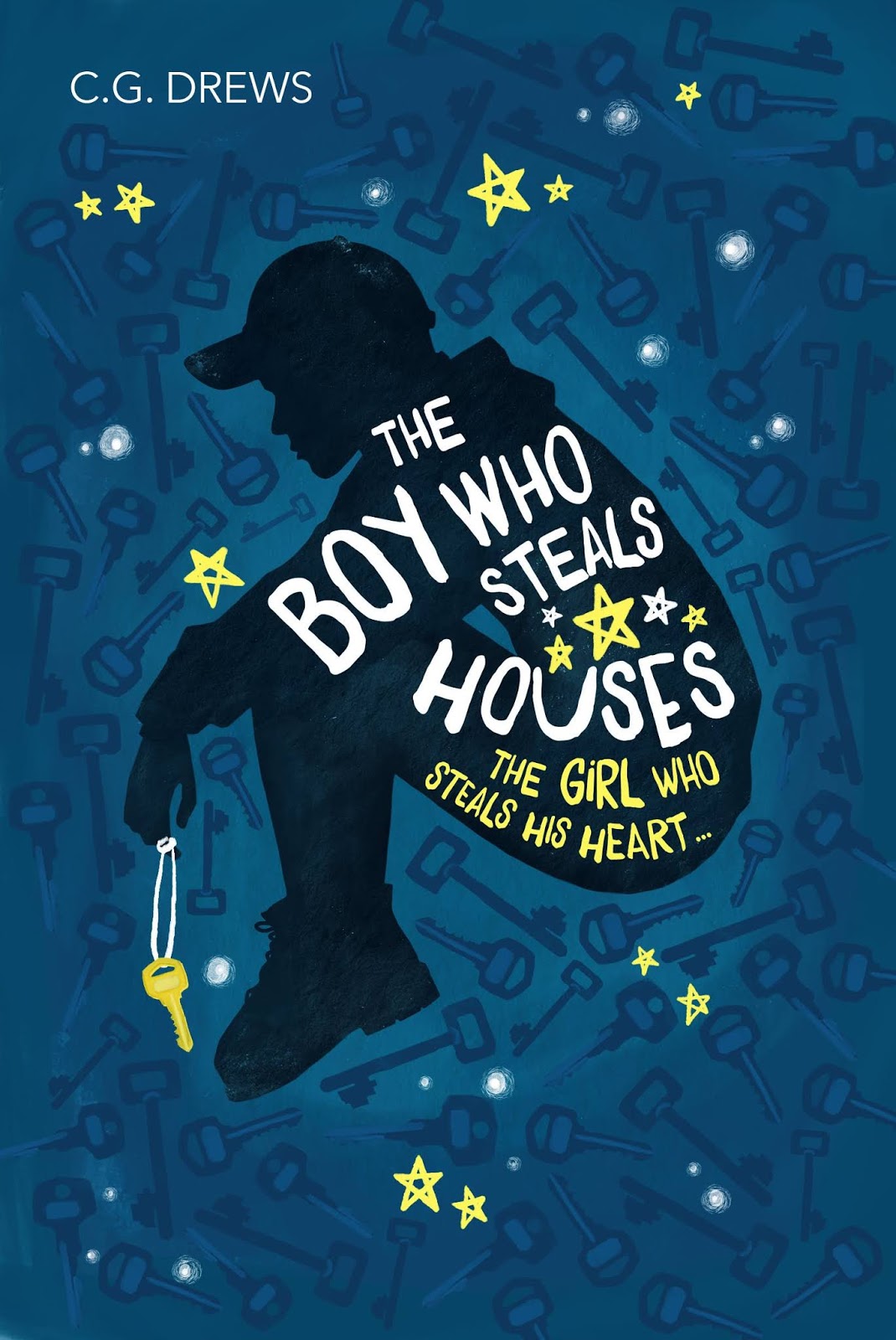
The Boy Who Steals Houses by C. G. Drews


Neurodiversity.

Sam just wants to find another house to temporarily stay in with his brother Avery. Even though Avery’s older, Sam feels like he has to take care of him. Then he accidentally breaks into the wrong house, one that’s full of people, and instead of getting arrested or kicked out, he makes a friend. This book is also an #ownvoices story featuring characters on the autism spectrum.

Not to mention the story actually helped me out of a bout of depression. Though it didn’t actually speak to my circumstances at the time, it was still the story I needed at that time.

A Silent Voice by Yoshitoki Oima


Physical disability representation and neurodiversity.

These books are intense. Shoya is a boy who bullied Shoko, a partially deaf girl, in his school until she left. Years later, isolated from the rest of his classmates, he attempts to make amends. I particularly liked the way the story addressed physical disability as well as the concept of forgiveness, which is never as easy as it sounds. I’ve only read the first two Manga, but my sister and I watched the Anime, and I cried. Twice.

Since I’ve gone back to work, I’ve found it can be difficult to hear people when everybody is wearing a mask. So I started using some sign language (ASL) to communicate little things (e.g. single-file lines I dubbed “the snake” and used the snake gesture), and I’m actually thinking about learning as much ASL as I can. The only problem is that like other languages, sign language can differ from country to country.


Kids Like Us by Hilary Reyl


Neurodiversity.

Martin is spending the summer in France with his mom and sister. As a teenager on the autism spectrum, he may not always understand his family, but he is doing his best to make friends at his local school. Not only are the characters stunning, but the cultural aspects are great as well. I really appreciate how the author touched on what it’s like to live in a foreign country, and how it can be difficult whether or not one is neurotypical.

If you haven’t noticed, I tend to lean toward books with autism representation. I have several family members on the spectrum, so I like to do my best to understand their perspectives. Yes, I realize you can only learn so much from fiction, but it’s like the saying goes “When you’ve met one person with autism, you’ve met one person with autism.” No two people are alike, and fiction is merely a tool that I like to use to help me learn more.

Bone Gap by Laura Ruby


Neurodiversity.

Finn is determined to figure out what happened to Roza and why she disappeared. The only problem: he’s face-blind, and recognizing people can pose some difficulties. This kind of disability isn’t often addressed in fiction, and more often than not, I’ve seen it done poorly instead of well. But Ruby does an excellent job, and her writing style is stellar. I also like how this book has fantastical, magical-realism-like elements to it, though it can be confusing at times.

The Art of Feeling by Laura Tims


Physical disability and neurodiversity.

Sam has had to use crutches since a car accident that killed her mother and left her disabled and dealing with bouts of depression. She ends up meeting Eliot, a boy who can’t physically feel anything (Anhidrosis), by accident. As their friendship develops, Sam struggles to remember what happened during the car accident. I recently reread this one and enjoyed it just as much as the first time, though it had more swearing than I remembered. Still a good read.


Eliza and Her Monsters by Francesca Zappia


Neurodiversity.

Eliza doesn’t like talking to people, so when she makes friends with Wallace, they text each other for several days before they say anything aloud. She’s also the author of a popular webcomic series, but nobody knows about her online identity, not even Wallace, who’s a huge fan. Socially awkward adventures ensue. Although my social anxiety has never been as bad as Eliza’s, I found her story to be incredibly relatable.

So there you have it! Seven great books that represent disabled characters. You might also enjoy these neurodiverse YA novels: Starfish by Akemi Dawn Bowman, The Astonishing Color of After by Emily X. R. Pan, All the Bright Places by Jennifer Niven, A World Without You by Beth Revis, and Made You Up by Francesca Zappia.

Let’s chat! Have you read any of these? Have they made it to your TBR? Do you actively seek out books with disability representation? What are some of your favorites?

***

Friday, April 19, 2019

Book Blitz and Giveaway: Why I Pre-Ordered The Boy Who Steals Houses

I don’t get to pre-order books very often simply because I move so much. This year, I was rather disheartened because C. G. Drews’ latest book, The Boy Who Steals Houses, was coming out and I knew I wouldn’t be able to preorder it. Stupid travel. Until I was talking with a fellow fan of Drews’ work who offered to hold onto the book for me. (Thanks, Sarah!) I think she just wants to read my hard copy, but hey, I offered to let her do so.

What’s so exciting about TBWSH, you may be asking?

Here’s a quick breakdown of a few things I’m looking forward to.


A Thousand Perfect Notes was Amazing


I’ve had a lot of fun reading Drews’ blog, Paper Fury, but I had even more fun reading her debut, A Thousand Perfect Notes (see book review). Not only is the cover gorgeous, but my copy also smelled like fruit. Suffice to say, I’m excited about her latest story and want to support her as a book blogger.

Synopsis—from the Book Itself!


Can two broken boys find their perfect home?

Sam is only fifteen but he and his autistic older brother, Avery, have been abandoned by every relative he’s ever known. Now Sam’s trying to build a new life for them. He survives by breaking into empty houses when their owners are away, until one day he’s caught out when a family returns home. To his amazement this large, chaotic family takes him under their wing - each teenager assuming Sam is a friend of another sibling. Sam finds himself inextricably caught up in their life, and falling for the beautiful Moxie.

But Sam has a secret, and his past is about to catch up with him.

(Ooooh, the drama!)

About the Author


C.G. Drews lives in Australia with her dog, a piano, and the goal of reading every book in existence. Consequently, her brain has overflowed with words and she spends her days writing novel after novel. She blogs at Paper Fury, never sleeps and believes in cake for breakfast.


You can buy a copy of The Boy Who Steals Houses on AmazonWaterstonesThe Book Depository, and Wordery. I use Book Depository, even though their shipping is slow as Entish. Seriously. I pre-ordered a copy of A Thousand Perfect Notes, which was released last June. Then in September, I ordered three more books from Barnes & Noble and they still came first! That’s what you get when shipping is free.

So there you have it!

I haven’t actually read my copy yet, because it’s still in the snail mail, but I plan on posting a review on Goodreads once I’ve read it. Thanks to Aussie YA Bloggers for the promo material. Before you go, don’t forget to enter the lovely giveaway for a chance to win your own signed copy!


Now I’m off on a blogging hiatus. Happy Easter, everybody. See you in May!

Let’s chat! Have you read any of Drews’ work yet? Do you like pre-ordering books? Who are some authors whose work you will always read?

***