Sunday, February 13, 2022

Subgenres: Historical Fantasy

My brother is an avid history buff. While I may not share his enthusiasm for all things history, especially when it delves into the politics of the past, *gags* I do enjoy historical fiction. I’ve already written a post about this genre, and my opinions have only slightly changed, so I’d like to jump into a blend of genres—historical fantasy.

Historical fiction can be a fun genre. Fantasy can also be great. But what about when you have historical fantasy! Prepare for historically inaccurate magic, everybody. Or maybe it’s real…
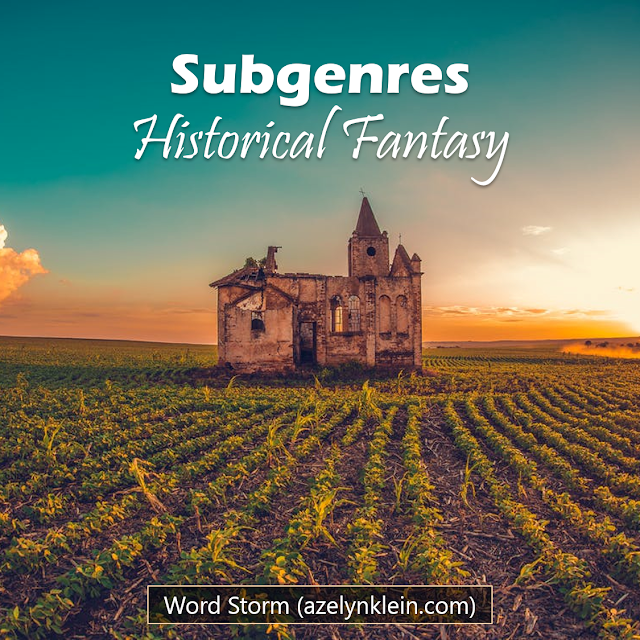


Historical fantasy: a subgenre of fantasy that takes place in the real world in the past. The character(s) may be involved in historical events, meet historical figures, or experience historical settings. Magic is an element that puts a twist on events that we may be familiar with.


Suspension of Disbelief

In historical fiction, writers might get flack if they didn’t get that one date right. Or maybe that character was supposed to be blonde. Hold up. What is this, a movie adaptation? *checks notes* Nope. It’s about books. Okay, moving on.

Historical fantasy is designed to be inaccurate. Or maybe a more appropriate word would be unexpected.

One thing I enjoy about fantasy is the suspension of disbelief. Historical fantasy is one of those fantasy sub-genres that pushes that boundary of disbelief. It puts characters real or made up and puts them in situations that actually happened, then asks the readers to bear with them while it throws in a touch of magic, in a similar manner to magical realism, where it’s hard to tell what’s real and what’s not.

A great example of book that suspends disbelief is Megan Banne’s The Bird and the Blade. Though it leans more toward the historical than the fantastical, there are fantastical elements that may leave the audience wondering, “Hey, wait a second… Did I read that right?”


Historical Events

Many of us have heard about the Battle of Waterloo, and if you’ve happened to read Les Miserables (not fantasy), you’ve probably read more than you wanted to know about it. But, have you heard about time during the Battle of Waterloo where the magician broke his moral code to create zombie soldiers? Okay, when I put it that way, it sounds weird, but I suppose weird applies to the entirety of Jonathan Strange & Mr Norrell (Susanna Clarke).


Historical Figures

What’s historical fiction without historical figures? Okay, so they don’t show up in every book. But historical fantasy sometimes includes historical figures too. Just because it’s fantasy doesn’t mean it doesn’t try to be true to the character(s), though. Nadine Brandes does a great job with historical fantasy characters in Romanov (Anastasia Romanov) and Fawkes (Guy Fawkes). Though I prefer the plot of Fawkes, both stories serve as a great introduction to real figures and their tales.

Another example that includes historical figures is Dante’s Inferno. In the epic, Dante goes on to meet long-dead poets like Virgil, Homer, and Ovid. It’s a common characteristic in classical fantasy where the main character meets with a historical figure or somebody of prominence, who would now be considered historical. Though those don’t quite qualify as historical fantasy.


Historical Settings

Not going to lie, this is one of my favorites because a lot of these places, you can actually visit!

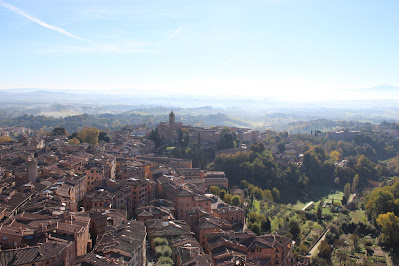
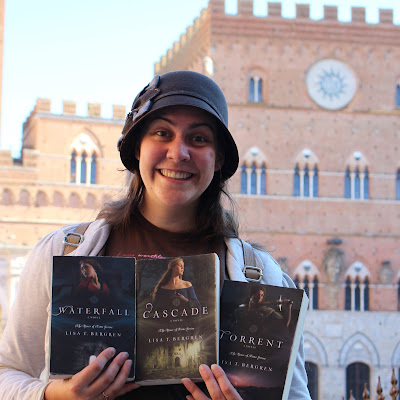
One of my favorite examples is The River of Time series by Lisa Tawn Bergren. Why stop at a fictional visit to Italy when you can time travel to medieval Italy and fight with a broadsword or a bow. I really want to take up broadsword fighting now. Thanks a lot. After reading these books, my sister and I visited Siena, one of the cities where the story takes place, and Firenze (Florence).

It’s been a while since I’ve read the stories, though. Perhaps it’s time for a reread…


There you have it! Just a few characteristics of historical fantasy and some recommendations.


Let’s chat! Do you enjoy historical fantasy? Have you read any of the books listed? Any that I missed?


***


Similar posts: Subgenres: Portal Fantasy, 7 of my Go-To Authors, and 7 Reasons I Enjoy Historical Fiction

Sunday, January 23, 2022

Subgenres: Portal Fantasy

Do you ever have those moments where you’re visiting in a garden and see a stone archway or maybe you’re walking in the woods and come across a peculiarly bent tree and think, “This looks like a portal to another world”? Sometimes I do.

Today, I’m picking back up with blogging with a new mini-series—subgenres! Every month for an undetermined time, I’m going to pick a subgenre and recommend a couple books. I’m going start with one of my favorites, and one of the more familiar ones—portal fantasy.


Portal fantasy: a subgenre of fantasy that features at least two different worlds. The character(s) often start in our world and travel to another world via some magical method, often a portal, which often takes the form of a door.


Coming-of-Age

Many, though not all, portal fantasy stories tend to include some sort of coming-of-age protagonist, so it’s a great subgenre for young adult fiction. Part of the charm of portal fantasy is experiencing the wonder of a place through the perspective of a child.

Take C.S. Lewis’ The Chronicles of Narnia for example. When the Pevensie children first discover Narnia, they may not want to live there for the rest of theirs lives, but they soon come to love the talking animals of the land. In later books though, some of the characters “age out” of Narnia and are told it’s time to live in their own world from then on. While this can be disheartening, it’s a part of the growing up process (or in some cases, the re-growing up process) that the characters endure.


The Journey

Another feature includes one or more characters trying to stay in the other world or trying to get back to ours. In this sense, portal fantasy always features some sort of journey, from one world to another. Though why anybody would want to leave these fantasy worlds, I don’t know. They tend to be pretty awesome. I’ve said it before, and I’ll say it again—if I happen to find myself in a magic realm, please leave me there. I don’t want to come back.

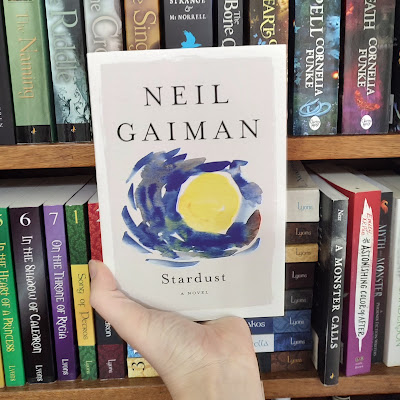
A lot of traveling takes place in Neil Gaiman’s Stardust, from a tiny little town in England called Wall across the realm of Faerie and even into the clouds where ships sail the skies. Not to mention various methods of travel from a magical candle to a unicorn to a ship to just plain walking. It’s a weird book. I like it.

One might even put Howl’s Moving Castle by Diana Wynne Jones in this subgenre because it features a character originally from our world who ran away to another, and with a title like Moving Castle, yes there’s lots of traveling. I’m talking about the book, here, not the movie. England pops up once or twice, but it’s not the main setting. The castle also features a portal door, which lets out in various cities. Maybe I’m stretching it.


Magical Items and/or Abilities

Portal fantasy doesn’t just feature magically transporting from one world to another, though. It also tends to feature some sort of magical item or ability or both. Take the Shades of Magic trilogy by V.E. Schwab. Some of the characters have the innate magical ability to world-hop, and some characters (sometimes the same ones) have magical items like a multi-sided cloak or an evil rock that will corrupt the heart of an entire realm.

The term world-hopping makes me think of Brandon Sanderson’s Cosmere books, but they don’t feature our world, so it’s not exactly portal fantasy… Oh, well.


Various Quests


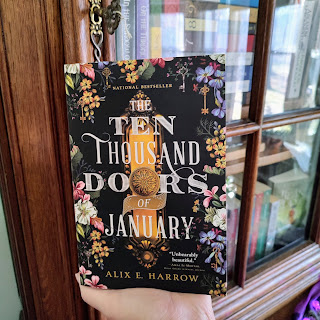
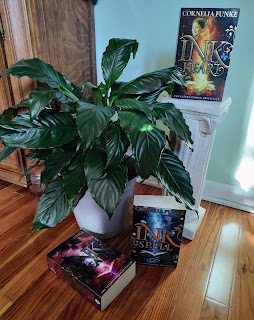
One of my favorite things about fantasy is the variety of plots, and portal fantasy is no different. Some stories like Cornelia Funke’s Inkworld series feature a quest to defeat tyranny and go home (or find a new one), and others like Alix E. Harrow’s The Ten Thousand Doors of January feature one character’s hunt for the truth while evading those trying to cover it up and uncovering many Doors along the way. Some stories are about realm or kingdom saving, and others have lower, more personal stakes. I enjoy them both.


I’m seeing a trend in author names. If you abbreviate one or two of your first names, you might be a perfect fit for the portal fantasy genre. L.A. Klein. What do you think, guys? Should I write a portal fantasy?

One might also argue that multi-verse stories could be portal fantasy, but I’m not actually a fan of most multi-verse stories or the multi-verse theory, so I’m going to leave those books alone for now.

Thanks for reading!


Let’s chat! What are some of your favorite portal fantasy novels? Have you read any that I listed? Are there any others that you’d recommend?


***


Similar posts: 7 Sci-Fi/Fantasy Book-to-Movie Adaptations I Enjoy, 8 Popular Fantasy Novels I Enjoy, 7 Reasons I Enjoy Fantasy Novels

Sunday, January 9, 2022

Campfire Writing

There’s an app for that. We’ve all heard that phrase before, and honestly, it’s a little worn out. A couple of months ago, I was in between projects and trying to figure out what I wanted to write next. When I finally settled on a story idea—a fresh one that had zero development—I decided I wanted to try something new with outlining.

And I. Hate. Outlining.

It’s probably my least favorite part of the writing process because it’s like putting together a puzzle but you have to create the pieces and you don’t even know what the picture is supposed to look like. I wanted to try something similar to the notecard method again, where you write out a plot point on a notecard and can rearrange them any which way until you find a story you like.

Now, I try not to use paper, opting instead for all digital. (Maybe that’s why I can’t read e-books? Because staring at a screen feels like work?) My sister who’s also a writer suggested Campfire, so I thought I’d give it a try.


When I first started using the site, I got really excited because you can set it to different themes according to the genre of your story. I picked sci-fi for this particular project, but I also like the look of fantasy. You can also use Campfire to outline other projects, not just stories.


Features

There are more options than what I list below, but I included the ones I used for this particular story.

  • Characters
    • Names. Nicknames. Age. Role. Personality Type. Positive and negative character traits. Description. You name it. There’s lots of options to choose from, and you can pick and choose what you want to fill out. You only get 10 characters in the free version, which is fine because not every story needs to have 100,000 characters, but still. When it comes to named characters, I think my last novel had about 20-something.

  • Locations
    • Like character descriptions but with different attributes. In in the free version, you only get 5. Good thing I wasn’t working on a travel story. Oh, wait… Any extra details I wanted to include if I didn’t have room, I just crammed into the timeline. Mwuahahaha!

  • Maps
    • Not to be confused with locations, though you can link the items together. This particular option allows you to upload a map, which is cool, but I wish they had the option to develop and edit a map. That would be awesome, but I understand why they don’t. To make my own map, I used the Polygon Map Generator by Red Blob Games.

  • Timeline
    • My favorite part of the app, and yes, you can rearrange the events! I only used the description section, but you can link your characters to events. In the free version, you only get 20 events and 2 timelines. I was going to make a secondary timeline but decided to focus on my main timeline and ended up combining a bunch of events. There’s no limit to how much information each item you have access to can hold.

  • Encyclopedia
    • Want to include a list of stuff that doesn’t necessarily fit in anywhere else? Use this option! I particularly enjoyed the statistics table and the description column. In the free version, you can have 5 articles, but I only used 3.

  • Species
    • Lifespan. Sleep cycle. Average height. Average weight. Kingdom. Habitat. Descriptions. I actually used the subtitles here to add made up Latin names. In the free version, you only get up to 5 species. Sure, I only used 3 for this particular story, but I can come up with dozens of others if I was writing a fantasy novel.

  • Other: Manuscript, Research, Relationships, Magic, Cultures, and Items
    • The other options I might consider using for future projects include Magic and Cultures. Normally, I would use them, but I didn’t need them for this project.


Pros

  • Aesthetics
    • If you’re like me and you like to collect pretty things, then you might just enjoy this site. Not only does it have genre-based themes, but you can also add your own pictures. It’s almost like having an aesthetic board for your story on Pinterest but not really. The theme option really helps set the mood for creativity.

  • Easily accessed organization
    • Once you figure out how to navigate the site, you can link everything together. Or not. It’s up to you. But it’s really convenient to find exactly the information you want without having to scroll a bunch.

  • Plenty of options
    • Seriously, all the options! I didn’t even use them all, but they helped me a bunch with things like character development, world building, and my timeline.

  • Fun to use.
    • I actually enjoyed outlining for a change. Maybe that’s because the site is shiny and new to me, but I just might enjoy using it again in the future.


Cons

  • Limited use with the free version
    • I maxed out my characters and timeline events. I might have accidentally broken the timeline and ended up with 21/20 events. Don’t know how that happened, but I’m sticking with it.

  • Limited availability
    • I know the site claims it works on mobile devices, but my sister and I couldn’t figure out how to access it on both Android and Apple. So if I want to outline my story or develop my characters, I have to use my computer, and I have to have internet. It’s not difficult, but it’s not always convenient.

  • Slow processing
    • I’m not the fastest typist, but I can get up to 90 words per minutes when I’m on a role, and Campfire doesn’t always process typing that fast. Maybe it’s my computer? Also, the autocorrect suggestions are not as helpful as Microsoft Word.

  • Characters are geared towards humans
    • This one’s a little easier to work with considering you don’t have to include all the character development options. For example, I usually skip over character description, option for the bare minimum such as height.

  • Timeline dates are limited to Earth eras, and you can’t get rid of the date option
    • If you’re like me and you’re writing a sci-fi story that takes place in a new mythical era, or you’re writing fantasy and yours don’t even use Earthen months, this bit can be frustrating.


Overall Review of Campfire Write

Overall, I give the site 7/10 stars. To me, the pros outweigh the cons. For the first time in a long while, I actually enjoyed outlining and was ready to start my rough draft within two weeks. Which is great considering it usually takes me two to three months. Thank you, Campfire! I will likely be using the site more in the future.


Let’s chat! Have you tried Campfire before? Do you use any sites for your writing process? Which ones?


***


Similar posts: 5 Reasons to Attend WriteOnCon, 3 Types of Writers You Should Know, and 3 Methods for Outlining Your Novel

Sunday, January 2, 2022

2022 Reading Resolutions

Happy New Year! *eyes 2022 warily* I don’t really put my hope in the New Year, but it is fun to evaluate my reading progress and make new goals. My aim this year is to be more realistic, but I guess we’ll just have to wait and see!


Goal: 1 Book 700+ pages

Perhaps I can finally find time for The Priory of the Orange Tree, which has been on my list for… *checks calendar* …three years now?


Goal: 2 Writing Books

I’m a writer so this is a must, right?

I can’t remember the last time I read a book on writing. I’m a bit of a skeptic. I don’t really believe in writing rules because what works well for one person may not work well for another. Team prologue over here! My favorite dialogue tag is “said.” And when I write what I know, I know about dragons, okay?

Plenty of writing books can be helpful though. And it’s dangerous to assume you already know everything. That’s when we stop learning.


On my list:

  • The Emotional Craft of Fiction by Donal Maass
  • Bird by Bird by Anne Lamott


Goal: 3 Books Published in 2022

I’m a little behind on recent releases. What’s a recent release? What year is it? Granted, sometimes these books are a little harder to get your hands on when you rely on the library, but hey! I try.


On my list:

  • The Undertaking of Hart and Mercy by Megan Bannen
  • The Lost Metal (Mistborn saga, book 7) by Brandon Sanderson


Goal: 3 Rereads

I did this last year, but it wasn’t exactly purposeful. Besides, I’d like to get back into some of my favorites that I considered worth buying. I don’t remember all of their plots anymore!


On my list:

  • Starfish by Akemi Dawn Bowman
  • The Final Empire (Mistborn saga, book 1) by Brandon Sanderson


Goal: 5 Books I Own

Not rereads. There, I said it. Now I can’t cheat! Right?


On my list:

  • Inferno by Dante
  •  Journey to the Heart of the Abyss by London Shah
  • Twenty Thousand Leagues Under the Sea by Jules Verne


Goal: 5 Books by 5 Different Non-American Authors

I’m going to go a step further and say I’m not going to count Manga. It’s really cool, but I read 35+ graphic novels last year, so that’s not challenging enough. That’s not to say I won’t read Manga, but rather that I won’t count it toward this particular goal.


On my list:

  • The Beast Warrior by Nahoko Uehashi


Goal: 1 Short Story Collection

I’m a little pickier when it comes to these. Usually, I’ll only finish it if features a story or several by an author I’ve read before. But they can be a lot of fun!


On my list:

  • Timely: A Phoenix Fiction Writers Anthology


Total books: 20


Is it doable? Yes. Realistic? *shrugs* Happy reading, everyone!


***


Let’s chat! What kind of books are on your list this year? Have you read or are planning to read any of these? Are there any books I didn’t list that I should consider reading?


Similar posts: 2021 Books in Review, 2021 Reading Resolutions, and Recommended Reading: Disability Representation

Sunday, December 26, 2021

2021 Books in Review

Hello! I haven’t been very good with keeping up with blogging lately or my reading goals it seems. My reading plans died a slow, miserable death. Who cares? 2021 was another crazy year, crazier than 2020 for me anyway, so I’m just happy that I got to read some good books along the way. Here’s a brief overview from some of goals and highlights for this year.


Goal: 1 Book 700+ pages

Rhythm of War by Brandon Sanderson—AaaaAAAaaaaHHHH!!! The plot twists. I did NOT see them coming! I also scrambled to finish this book in two weeks because somebody had a hold on it, but as I was approaching the end, the hold vanished. I may have finished all 1,200 pages in 2 weeks. A new record for me. 


My eyes are bleeding (but not really). Please excuse me while I dig out my reading glasses from the abyss… 10/10 would recommend!


Goal: 2 Poetry Collections

When the Stars Wrote Back by Trista Mateer—A delightful read full of art and poetry.

I Could Pee on This: And Other Poems by Cats by Francesco Marciuliano—The book itself was humorous, though not particularly memorable. The funniest bit though, was when I was going to show the book to my sister, and her cat peed on her beanbag chair. I’m not laughing. I don’t know what you’re talking about.


Goal: 3 Novels by Indie Authors I Haven’t Read

Ahab by E.B. Dawson—After reaching the end of the book, I realized I actually had read a book by Dawson before, so this one might not count? Eh, who cares. I want to talk about it. An interesting retelling with a great twist. Moby-Dick, but in space. Space whales. I actually loved the way Dawson handled with the story. It had more touches of classical literature than I would have expected for a sci-fi novel.

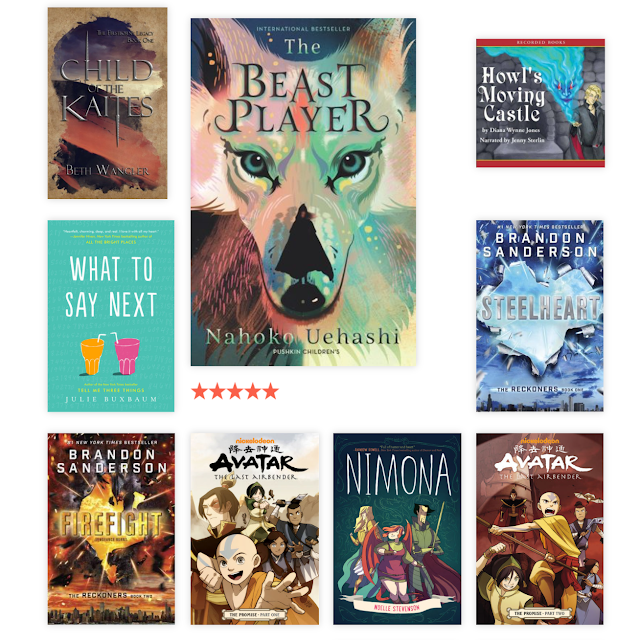
Child of the Kaites by Beth Wangler—Soooo, I didn’t enjoy this one as much as I thought I would. If it were pitched as a biblical-inspired book I might have enjoyed it more than a biblical retelling. As a retelling, it fell flat for me, especially since it focused less on the power of Aia (God) and more on the Aivenah (the devil).


Goal: 3 Classics by Non-American Authors

Um… I started reading Dante’s Inferno at one point…


Goal: 5 Books from the Depths of my TBR

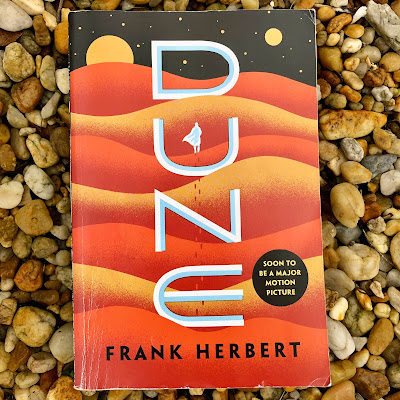
Dune by Frank Herbert—A sci-fi classic. This one has been on my list for a while now, and I once stopped reading it a couple years ago. Since a new film adaptation was coming out, I thought I’d give it another try. Dense yet fascinating, though I didn’t care for the way it ended. I did highly enjoy the latest movie adaptation though, even if it did only cover half the book.

Where are the other four books? *shrugs*


Goal: 5 Award Winners

New Kid by Jerry Craft—Newbery Medal and the Coretta Scott King Award. A delightful graphic novel that showed a different perspective of what it means to be a new kid at school. When I was younger, with my family moving around all the time, I was also the new kid more often than not.

Long Way Down by Jason Reynolds— Newbery Medal, Printz Award, and the Coretta Scott King Award. Heartbreaking book. I liked the style even if it was a little unconventional, but I wish the ending had a little more clarity even if I understand why it was vague.

Crossover by Kwame Alexander— Newbery Medal and the Coretta Scott King Award. I really enjoyed the style of this one, but the ending through me off guard. Still a great read.


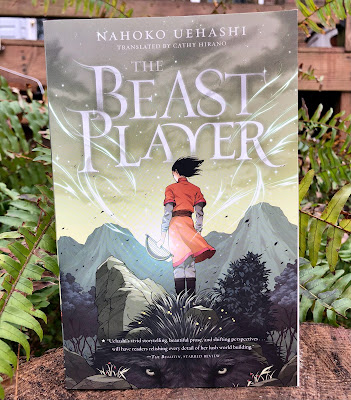
The Beast Player by Nahoko Uehashi—Michael L. Printz Award nominee. Such a delightful book, I went out and bought a copy as soon as I finished it. Translated from Japanese, The Beast Player explores a world with of Toda (dragons!), Royal Beasts (Pterolycus, a winged wolf), and the life of young Elin. It starts off seemingly simple and gradually grows more and more complex. I’m eager to read the sequel.

Between Shades of Gray by Ruta Sepetys—SCBWI Golden Kite Award for Fiction and more. This one broke my heart, but it was so informative. I didn’t enjoy this story as much as Sepetys’ Salt to the Sea, but I believe it’s equally important.

Pax by Sara Pennypacker--National Book Award Nominee for Young People's Literature. Such a sweet little book but still hard hitting. It looks innocent. It’s not. This is an animal book about the cruelties of the wild and humankind but the beauty that can still be found in both.


Goal: 1 Nonfiction Book about a Topic that Interests Me

I started reading Teach Like a Champion and The Emotional Craft of Fiction. Does those count?


Total books: 11 out 20

Ouch! Maybe I need to make my goals for 2022 more realistic… But hey! My Year in Books according to Goodreads looks pretty cool. Look at all the pretty covers!


Bonus: Novels in Verse

After attending WriteOnCon in Februrary, I resolved to read 3-5 novels in verse a week for poetry month in April!

Like Water on Stone by Dana Walrath—A heartbreaking account of the Armenian genocide. Part magical realism, part historical fiction,

Clap When You Land by Elizabeth Acevedo—Now I’m angry. I definitely enjoyed this book more than her first one, The Poet X. But a lot of the characters in this story just made me incredibly angry. I suppose that’s part of the point, but still. I liked the dual perspective, although once the character’s names disappeared from the top of the chapters, I had no idea who was who.

Planet Middle School by Niki Grimes—Honestly wish this one were longer and more fleshed out.

Long Way Down by Jason Reynolds—see Award Winners above.


Other Notable Books (guess my go-to author)

The Singing (The Books of Pellinor, book 4) by Alison Croggon

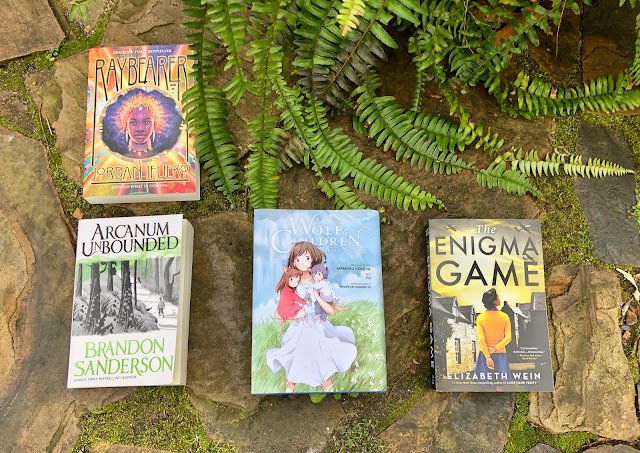
The Enigma Game by Elizabeth Wein

Elantris by Brandon Sanderson

Break the Fall by Jennifer Iacopelli

Network Effect (The Murderbot Diaries, book 5) by Martha Wells

Elatsoe by Darcie Little Badger (see book review)

Avatar: The Last Airbender, The Promise by Gene Luen Yang

Warbreaker by Brandon Sanderson

Descender (vols. 1-6) by Jeff Lemire

Raybearer by Jordan Ifueko (see book review)

A Thousand Perfect Notes by C. G. Drews (see book review)

Small Favors by Erin A. Craig

Arcanum Unbounded by Brandon Sanderson

Wolf Children: Ame & Yuki by Mamoru Hosoda


***


Let’s chat! What were some of your favorite books from this year? Have you read any of the ones I did? Did you meet your reading goals?


Similar posts: 7 Books I Bought Despite the Cover, 8 Books I Bought Because of the Cover, and 2021 Reading Resolutions

Sunday, December 12, 2021

7 Books I Bought Despite the Cover

Last month I wrote about books I bought because their cover caught my eye. This month, it’s time for the opposite. Brace yourself! Here are 7 books I gave a chance despite the injustice done to their covers.


1)   Flatland: A Romance of Many Dimensions by Edwin A. Abbot

Can this poor book not get a decent cover design? The library copy I read was so colorful, and I bought this particular copy online. What’s with the format of this particular copy being so flat? Wait… hold on. I get it. Ha!

A fascinating story based in mathematics and religion. Though it’s not exactly a compelling story, it’s a fascinating discussion on multiple dimensions and the doubt often accompanied by new discoveries because they don’t follow the way things have always been done. Now that I teach math, I have an even greater appreciation for this book.


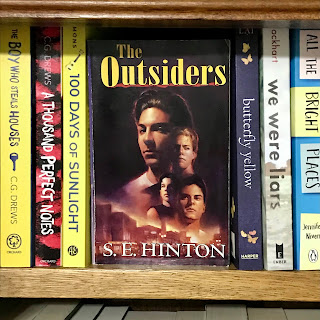
2)   The Outsiders by S. E. Hinton

Another book that can’t get a decent cover. I mean, the 50th anniversary edition is decent but nothing to write home about. The copy I borrowed in college had me cringing, and my current edition is just… why? Who thought this was a good idea?

If the book hadn’t been assigned reading in one of my classes, I definitely wouldn’t have picked it up. Now I recommend it all the time. Maybe this book can get a break because it’s so popular?


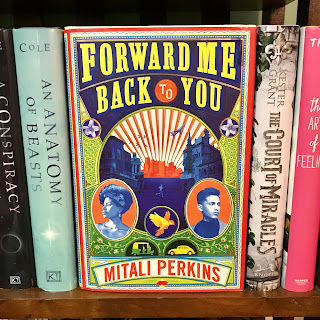
3)   Forward Me Back to You by Mitali Perkins

This one was actually a gift from a friend, and if it wasn’t, I probably never would have picked it up. But I’m so glad I did! I love this story. It’s a powerful one about empowerment, found families, and the fight against human trafficking.

But the cover hurts my eyes. I also remember when I was reading it, my dad got a glimpse of the book and asked if it was about communism. Which it’s not, but I can see where he got that idea from. Maybe I’m missing some cultural significance in the cover design and its color scheme?


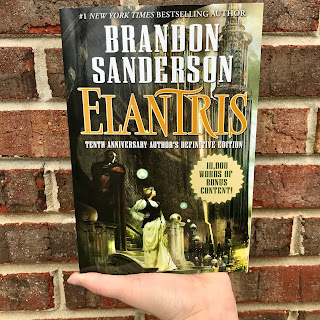
4)   Elantris by Brandon Sanderson

This cover never intrigued me, but I ended up buying it without reading it first because it’s by Brandon Sanderson! There are very few authors I’ll do that with.

When I was reading the book, I would glance back at the cover to get a better feel for the setting. But for whatever reason, this cover isn’t very memorable to me. The characters are though. I wish I could meet Raoden and Sarene!


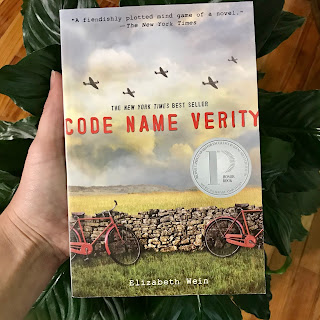
5)   Code Name Verity by Elizabeth Wein

This book actually has some pretty covers. Do you think the bookstore would have one? Haha! Nope. You get a bicycle. Anybody who hasn’t read this book want to tell me it’s about? I’ve read it, so I’ll go first. Spies. Intrigue. Female pilots who make me want to get my pilot’s license because the book was written by a female pilot! And we get a bicycle. *sigh* Forget the cover. Check out the first lines.

“I AM A COWARD.

“I wanted to be heroic and I pretended I was. I have always been good at pretending.”


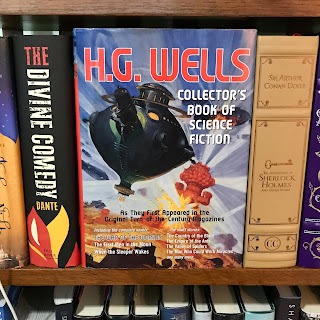
6)   H. G. Wells: Collector’s Book of Science Fiction

Yeah, this cover is just awful. But the book was cheap, and it has a lot of classic science fiction stories, so I couldn’t pass it up.

I used to love looking at the pictures for War of the Worlds when I was a kid. I didn’t bother reading the story back then, but the idea fascinated me. Now, I’ve read the book a couple times, and it’s still the only one in the collection I’ve read, but I’ll get around to the others… someday…


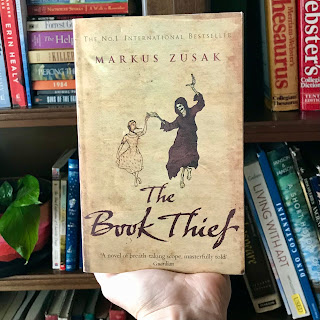
7)   The Book Thief by Markus Zusak

This one is another book that actually has a decent cover, but I didn’t get one of those copies because I wanted to support an indie bookstore. #shoplocal Unfortunately, my current city of residence doesn’t have many indie bookstores, so I tend to buy from Barnes & Noble. It’s not ideal, but at least it beats buying from Amazon.


There you have it! Seven good reminders not to always judge a book by its cover.


Let’s chat! Have you read any of these? What are some books you own that aren’t the prettiest but you enjoy anyway?


***


Similar posts: 8 Books I Bought Because of the Cover; Don’t Judge a Book By Its Author, Or Should You?; and Don’t Judge a Book by Its Cover

Sunday, December 5, 2021

Poem: Home

I haven’t been keeping up with my blog lately. I guess that comes with taking the entire summer off. Getting back into the swing of things is hard.

Anyway, poetry is still dear to my heart, so I just had to share another one with you today. I borrowed the prompt from Julia Garcia at Drops of Inspira. This one explores the concept of home. What is home?

For an army brat, home isn’t necessarily one place. It’s not where my parents are from—I never lived there. It’s not the last place I lived because that would ignore all the others. It’s not even my favorite places because that would leave out all the others that made me who I am today.

Home is… well, I think I’ll let the poem explain.

Don't forget to vote on your favorite poem from 2021!


Home


she sits in the attic collecting dust
                                    and spiders
while my feet are itching without these callouses

how do people do it year after year?
watch the leaves turn
                                    and drop
to stare at the bare wood
that blossoms with green
rich, entrancing full of cicada song
only for the leaves to turn
                                        and drop again

all the world’s a clock—
the month striking twelve,
and I’m still here
strapping on my boots,
knotting the laces while the dog tries to eat them
stay
—she pants—
bleib*

but my heart is yearning to bound up the stairs two at a time
dust off the suitcase
and go


***


*bleib—German for “stay.” Since our German Shepherd, Pfeffer, I’ve been teaching our dogs German and English commands.

Let’s chat! What did you think of the poem? What makes home for you?

Similar poems: Blue, Pronunciation, and Homesick